I recently discovered a YouTube treasure trove…the complete catalogue of the 1991 television show, “Homefront”
This drama series originally aired from 1991 to 1993. Created by Lynn Marie Latham and Bernard Lechowick, the show was set in the post-World War II era during the 1940s and early 1950s.
The series centered around the lives of the people living in the fictional town of River Run, Ohio, as they grappled with the aftermath of World War II and faced the challenges of rebuilding their lives. “Homefront” primarily focused on the daily struggles and triumphs of four interconnected families, offering a poignant portrayal of the effects of war on both the soldiers who returned home and the families they left behind.
Throughout its run, “Homefront” delved into various themes, including the challenges faced by returning veterans, the evolving role of women in society, racial tensions, and the societal changes that took place during that era. The show received critical acclaim for its engaging storytelling, authentic period depiction, and stellar performances from its ensemble cast.
Despite its positive reception, “Homefront” faced stiff competition in its time slot and underwent several schedule changes, which eventually led to its cancellation in 1993 after two seasons and 42 episodes. However, the series has garnered a dedicated fan base over the years and remains a fondly remembered period drama from the early 1990s.
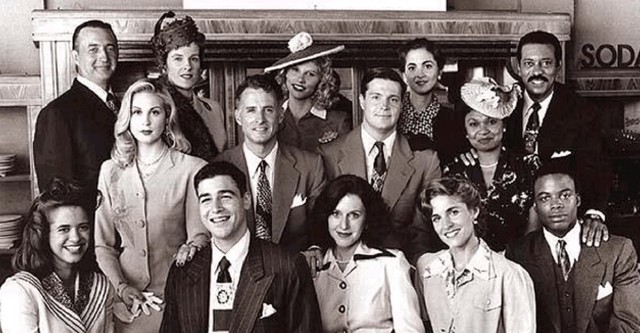
The terrific ensemble of actors in “Homefront”
You won’t find this chestnut streaming on any of the major platforms, but I decided to do a random search on the YouTube….and bingo….all 42 episodes. Eureka…what a find!
I’ve been thoroughly enjoying this rewatch and am reminded of how fascinated I’ve always been with the culture of post WWII America. It was the sublime youth of my parents, my aunts, uncles and so many from “greatest generation.” This television show reminds us of the sacrifices that were made by not only the returning soldiers, but by entire families and communities.
As time goes by, I think we tend to take that era more and more for granted.
And what a great sound track…Glenn Miller, Tommy Dorsey, Benny Goodman…fantastic. Sadly, these great songs are also in danger of being forgotten.

But the “Homefront” isn’t just a remembrance, it’s also a time when national pride surpassed political polarization. Challenges of race, feminism and economic equality certainly existed, but it was a time of hope….that all could and would be eventually worked out. Patriotism was real.
The show which aired during the height of my teaching career, was incredibly influential in the development of a significant perception in my educational philosophy. It occurred to me that postwar America provided meaningful connections. The stratification of our culture seemed to become more connected through our mutual armistice appreciation. The connections were obviously among people, but also occupations, religions, races, genders….to infinity. The relationships certainly maintained challenges, but those challenges were viewed with hopeful potential of solutions..
It occurred to me that teachers might be able to utilize the thread of a theme to connect the disciplines we taught. In my experience, teachers tended to work in a vacuum….and many liked it that way. But I believed the subjects of math, science, history, English and the arts could each become more powerful if they reinforced each other.
As it turned out, I articulated that concept as I interviewed for the position of Fine Arts Supervisor in my school district. I got the job. Hooray! And….my first initiative was to implement an interdisciplinary theme entitled “The Homefront” My intention was to integrate art, music and theatre. I utilized Stud’s Terkel’s “The Good War,” as an interconnecting text. The project culminated in a joint performance of the disciplines. The art department displayed multiple media …including life-size sculptures in the style of George Segal. (https://en.wikipedia.org/wiki/George_Segal_(artist)) As the other areas of the school noticed the project evolve, many teachers asked to also become involved. It was incredibly collaborative.
The initiative lead to a Best Practice citation from the New Jersey Department of Education. Several years later, when I applied for and was appointed to the position of Director of Curriculum and Instruction in my district, I couldn’t help but think of my “Homefront” project as having contributed to the success of my candidacy.
Then…the federal government instituted No Child Left Behind and the whole thing went to crap.
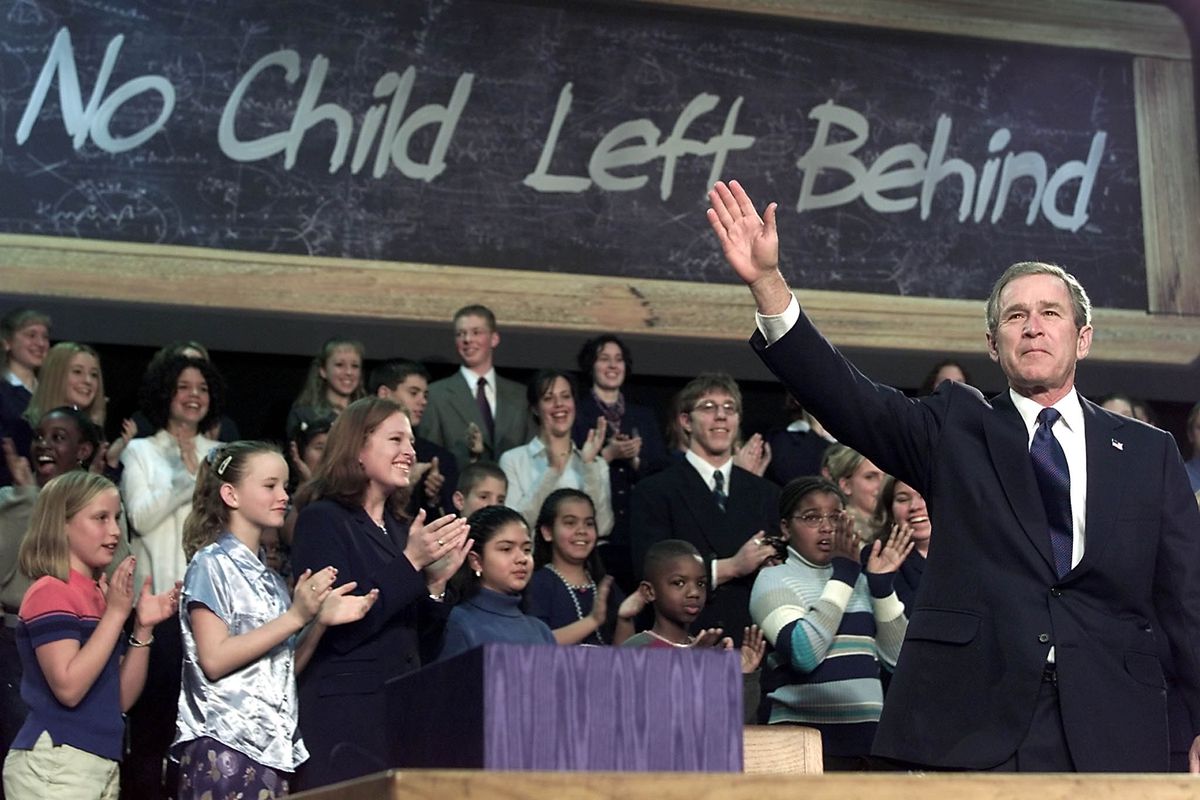
Very sad. But I think we still managed to help lots of kids while it lasted.
“Homefront”….a good memory.

 billbenbarker