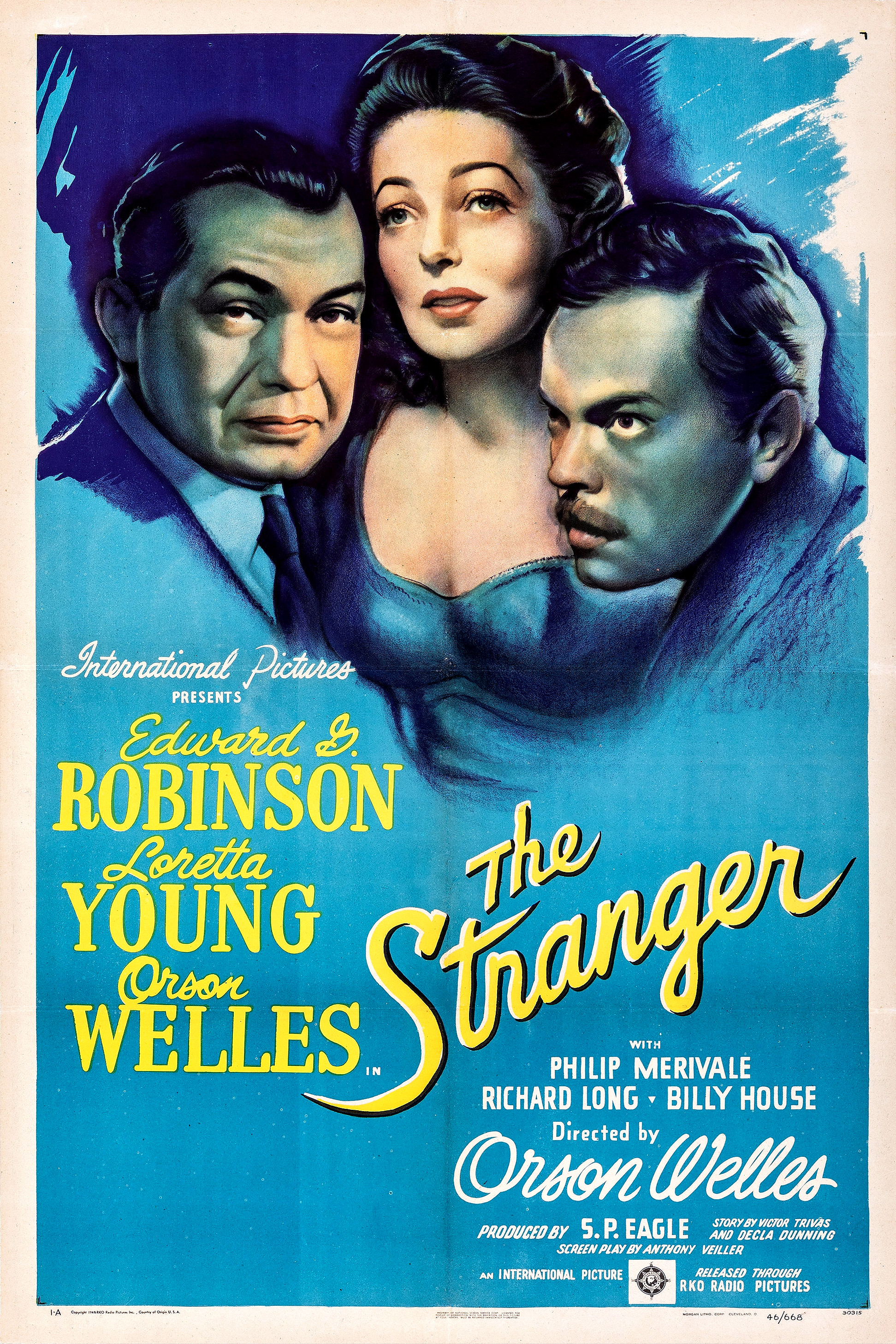
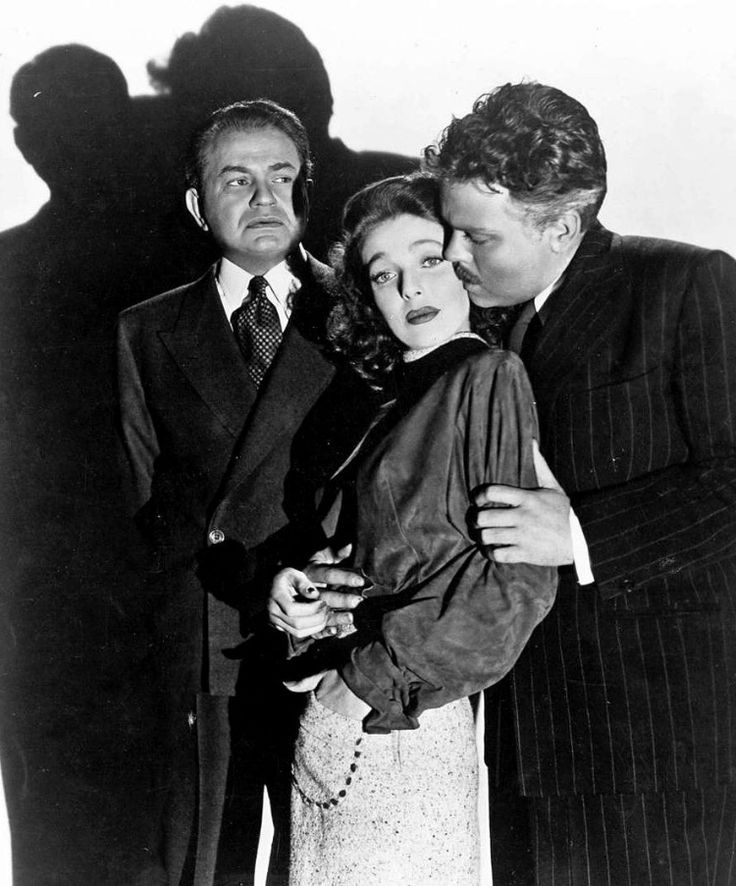
I recently rewatched the 1946 film noir, The Stranger. I found the movie to be intense, suspenseful and incredibly thought provoking. The film stars Edward G. Robinson, Loretta Young, and Orson Welles. Mr. Welles also directs. The film concerns a war crimes investigator tracking a high-ranking Nazi fugitive to a small Connecticut town. It has the distinction of being is the first Hollywood film to present documentary footage of the Holocaust.
As an adult I became well aware of the Nazi vision for the new world order. But my early academic study of history fell far short of apprising me as to the atrocities associated with the “Final Solution.” Admittedly I wasn’t a very good student in my formative years, but I find it hard to believe that such a tragic agenda would not have grasped my attention. I went to high school in the ’60’s. I was a Baby Boomer, afterall. World War II was a relatively recent memory. Still…nothing.
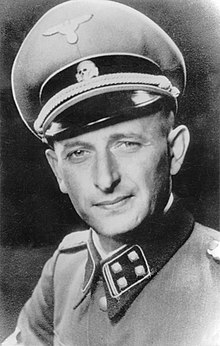
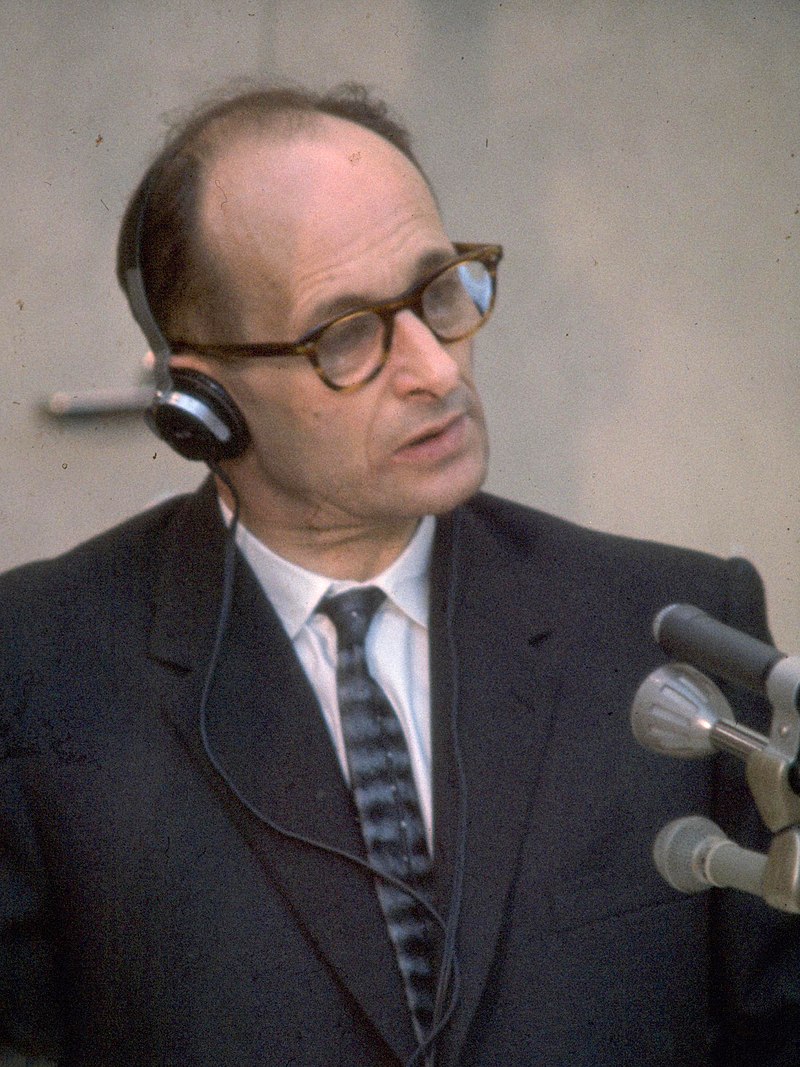
I do recall watching the television news regarding the 1960 capture and subsequent trial of Adolf Eichmann, one of major organizers in the Nazi plan for the extermination of Jews. His trial was on the news every night and my parents tried to explain to me his actions and their repercusions. I guess that’s when I finally started to “get it.”
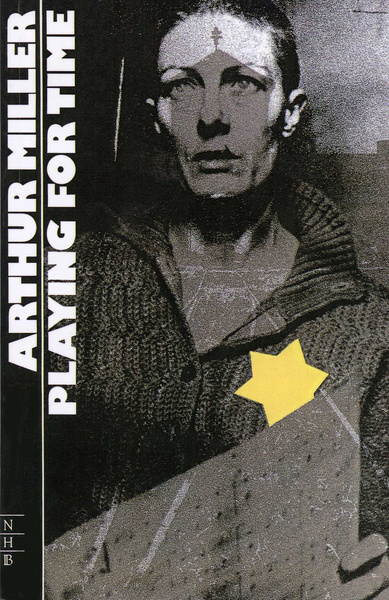
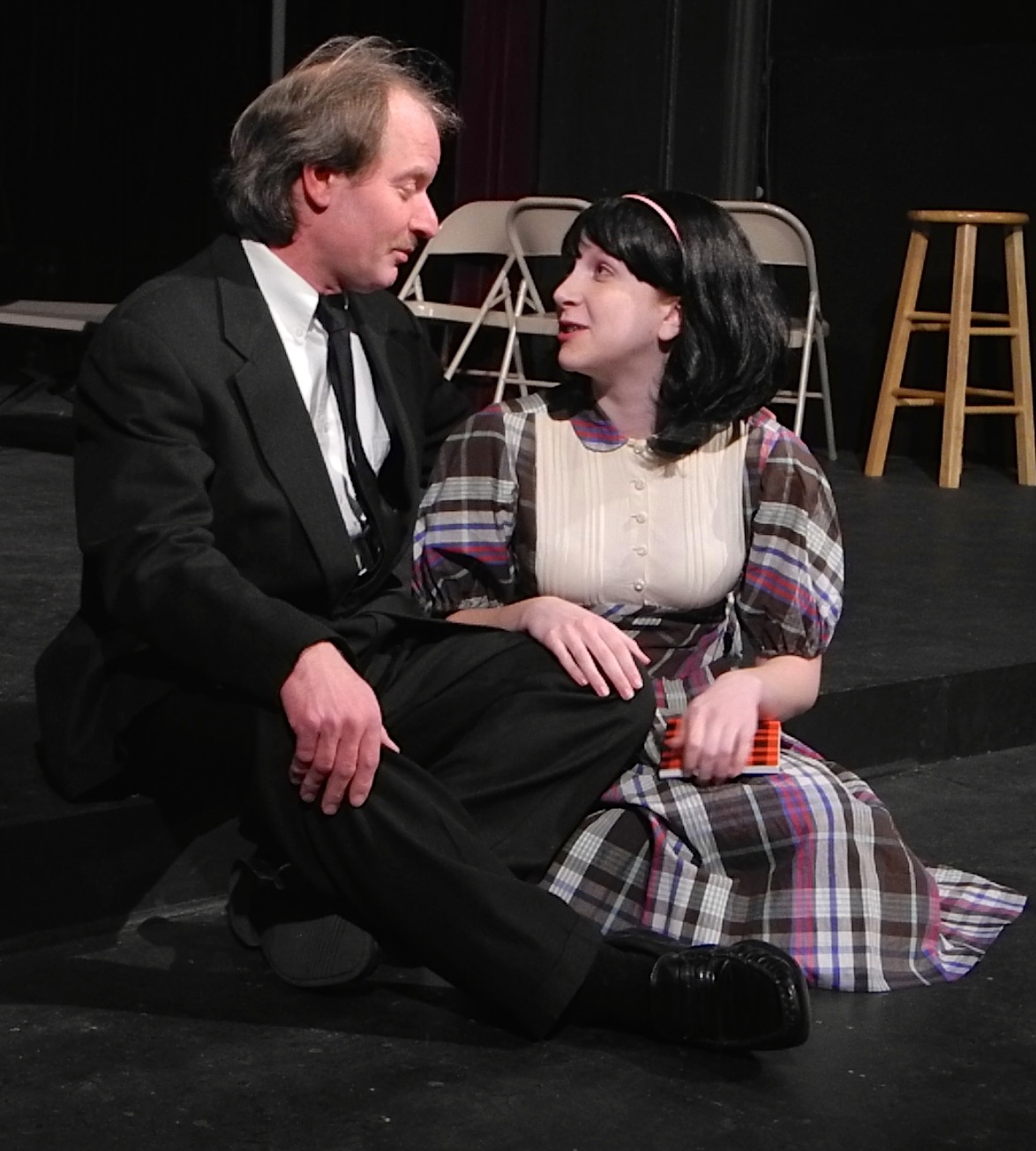
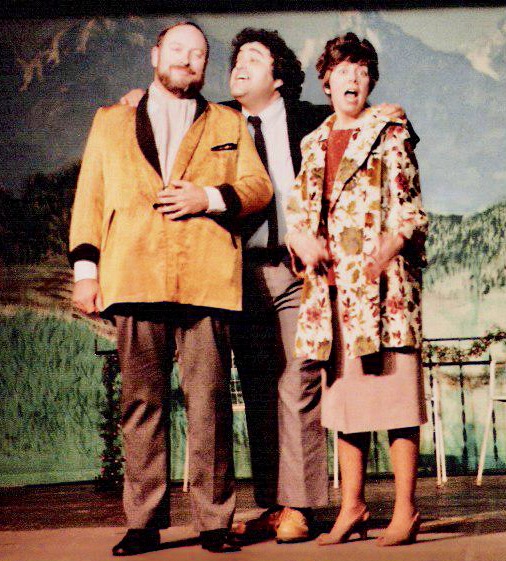
As with just about every historical event, my study has been motivated by various theatrical productions on which I’ve worked. Productions of Playing For Time, The Diary of Anne Frank and even The Sound of Music solidified my understanding. I think it took a long time to really penetrate my consciousness, because I found it impossible to believe that human beings could do such things to other human beings.
In studying the culture of The Stranger, it became apparent that many average citizens were also less than cognizant of the Nazi goings-on. The inclusion of the death camp documentary footage in the film was a revelation. Some refused to believe. Even today, some refuse to believe.
At his trial Adolf Eichmann acknowledged the existence of the Third Reich activities, but defended himself by saying he was “only following orders.” In The Stranger, Orson Welles’ Franz Kindler echoes the same sentiment.
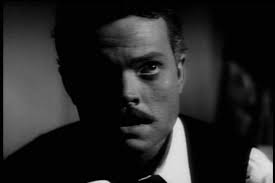
In the movie, Mr. Wilson, played by Edward G. Robinson, is an agent of the United Nations War Crimes Commission. He is hunting a Nazi fugitive, Franz Kindler (Orson Welles.) who has erased all evidence which might identify him, with the exception of an obsessive hobby…. a mania for—clocks.
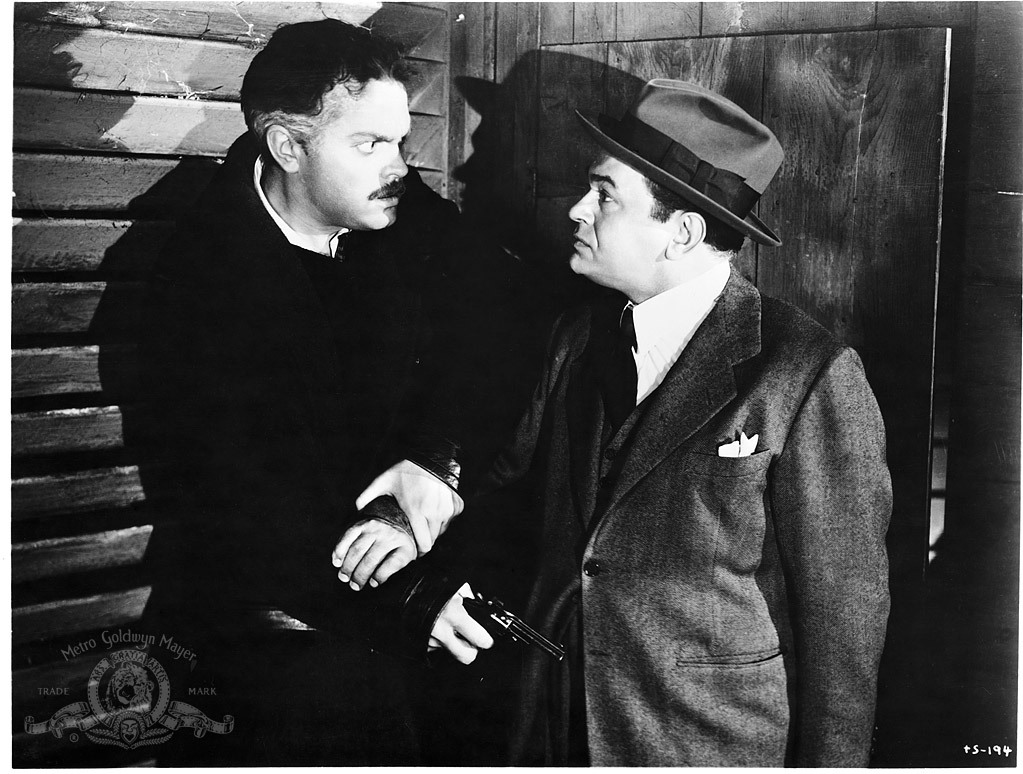
In an effort to track down Kindler, authorities release from prison a former Nazi associate, Konrad Meinike. Wilson follows Meinike to the quiet town of Harper, Connecticut, and that’s where the suspenseful chase begins.
Kindler has assumed a new identity as “Charles Rankin,” and has become a teacher at a local prep school. He is about to marry long time Harper resident, Mary Longstreet (Loretta Young). For all intents and purposes he has become a model citizen.
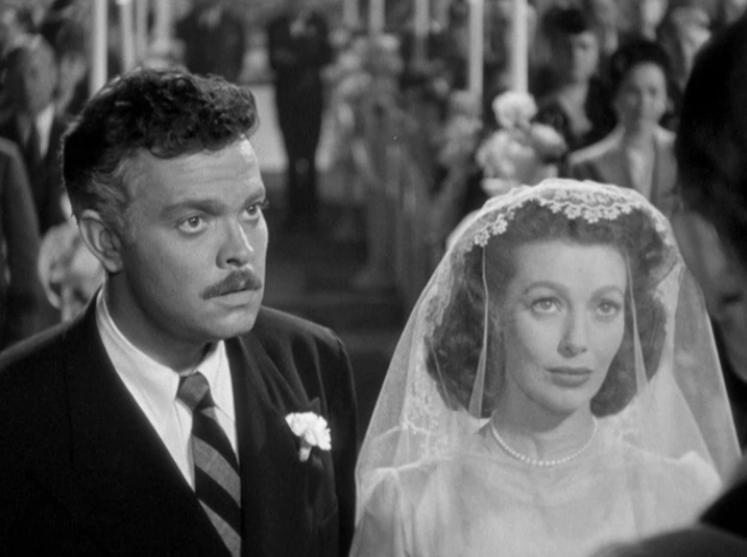
But this is a classic film noir. In spite of the absence of a femme fatale, the Welles character is the victim of a self-obsession exceeding the wiles of any seductress.
As the audience, we see the Rankin/Kindler character slowly disintegrate before our eyes. First… a realization that Meinike has been released for the sole purpose of leading authorities to him. Then…a series of actions employed to save himself, which instead lead to his ultimate fall from grace.
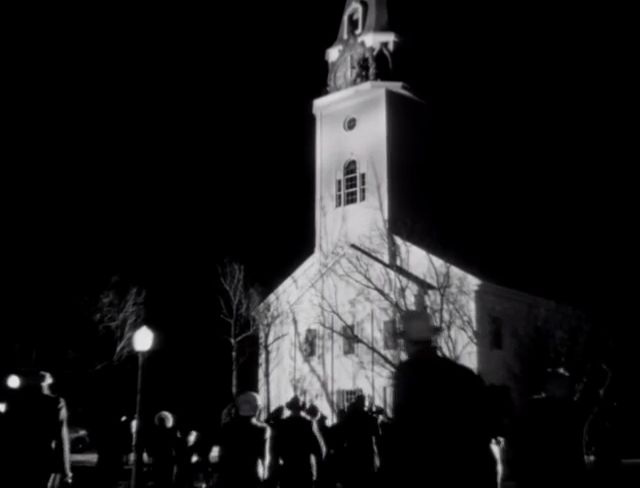
The distinctions we have come to expect in film noir are expertly executed here. Shadows of danger vividly implemented, stark camera angles, creative use of mirrors reflecting beyond the characters’ physicalities and brilliant contrasts of light and dark imagery.
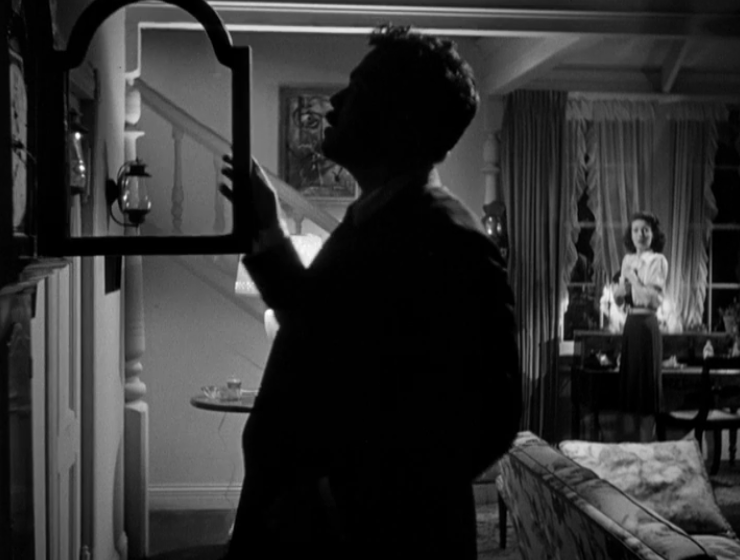
The Stranger is five years following Welles’ iconic Citizen Kane. The revolutionary technique of deep focus photography developed by Welles and cinematographer Gregg Toland exhibited in Kane, has been modified and improved here with stunning results.
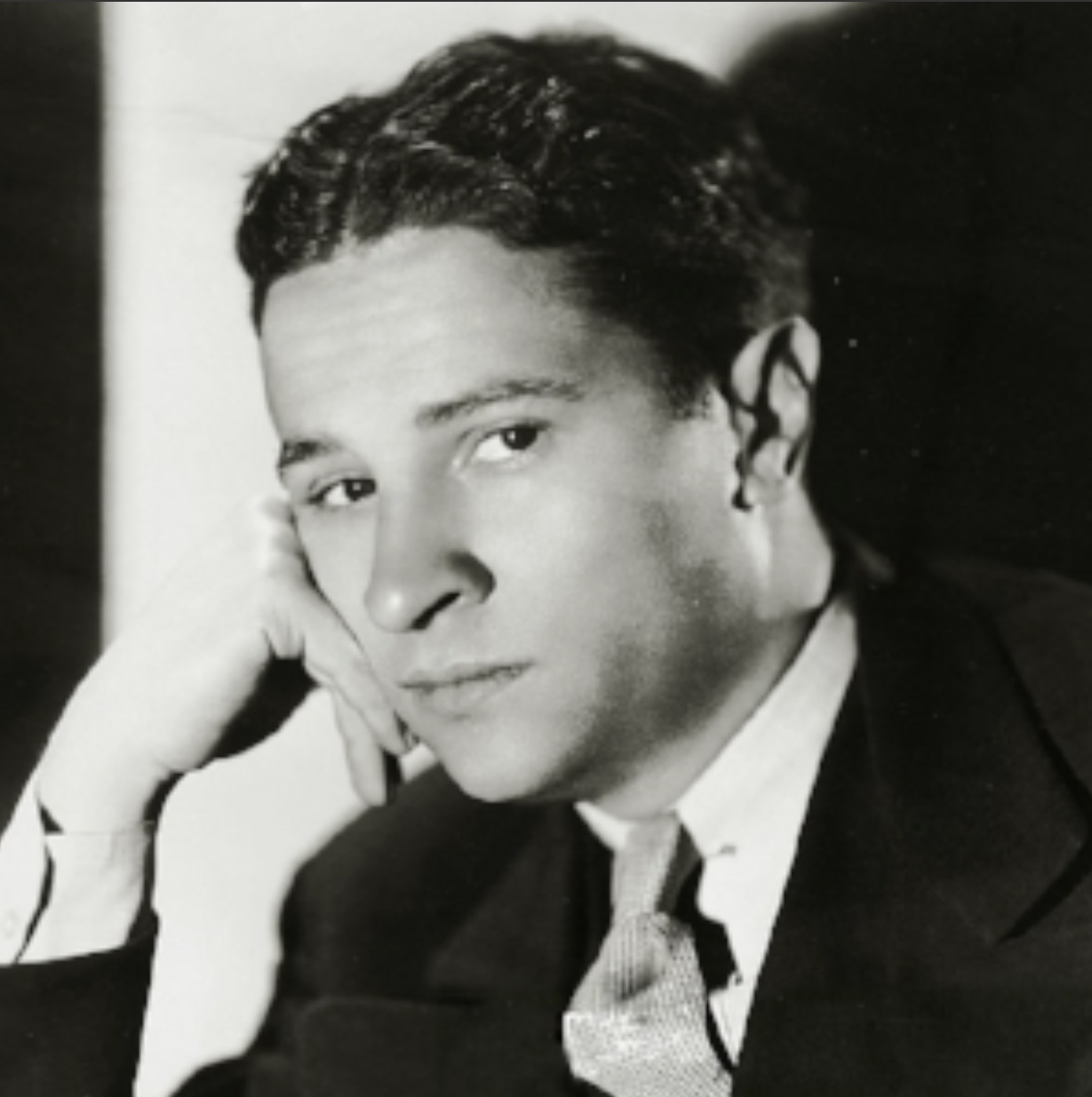
The film’s writing is well paced and engaging. Credits include Anthony Veiller (screenplay), Victor Trivas(adaptation ) and Decla Dunning(adaptation.) John Huston and Orson Welles, himself, are uncredited contributors.
The unlikely prospect of a monstrous Nazi living among the good people of Harper, Connecticut is a principal theme in the film. At one point, Mary Longstreet says “In Harper there’s nothing to be afraid of.” And as he builds a case against Rankin/Kindler, Wilson expresses the notion that Nazis “look like other people and act like other people.” But indeed the monster is present and his downfall provides a stark and suspenseful narrative.
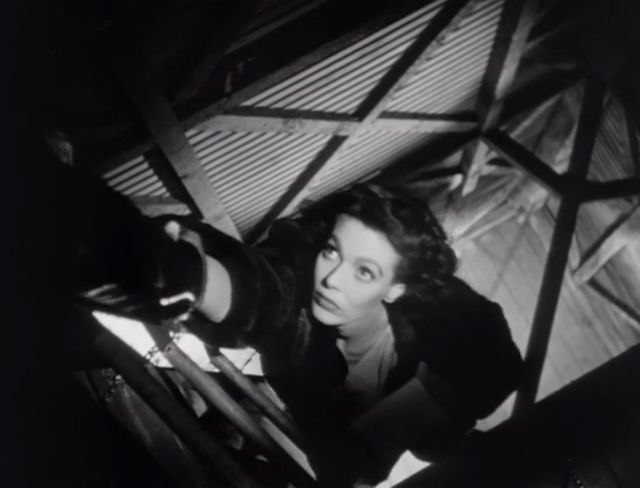
Loretta Young is the epitome of innocence in her role as Mary Longstreet, the faithful (to a point) wife. She embraces her loyalty with an intelligent naivety. Young’s acting is strongest as her character finally puts the pieces of the puzzle together and her emotions collapse.
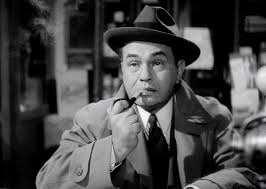
We know Edward G. Robinson primarily as a tough guy in his performances in such movies as Little Caesar and Key Largo. But his versatility is on display in The Stranger…. a low key, controlled portrayal that is highly effective.
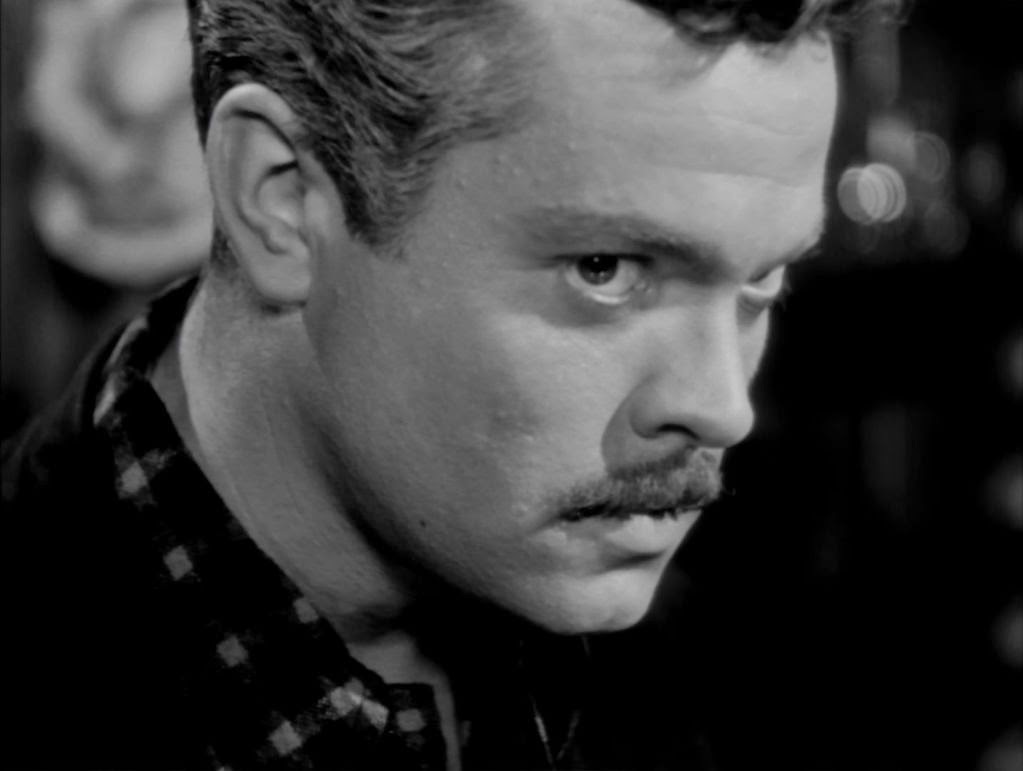
Orson Welles is magnificent in the role of the Nazi mastermind. He may “look like and act like other people,” but we see and feel the monstrosity beyond his appearance. Welles would only agree to play the role, if he could also direct the film. In 1945, Orson Welles was regarded as a loose cannon….. temperamental and unable to stay within a budget. The producer, Sam Spiegel, decided to take a chance on Welles as a director….but only with tight restrictions. As a result, much of the original shooting script was cut…and Welles’ vision for the film was drastically minimized. Understandably, he considered it his least favorite film. Ironically, The Stranger is the only Orson Welles’ directed box-office success.

I like the movie very much. I think it’s a highly engaging film to view. I also believe it stands up as a brutal reminder of man’s inhumanity to man. If you’ve never seen it, I highly recommend you give it a look. And…even if you have seen it, it might be worth a rewatch. Please feel free to like and comment. I’d be very interested in hearing your take.

 billbenbarker