
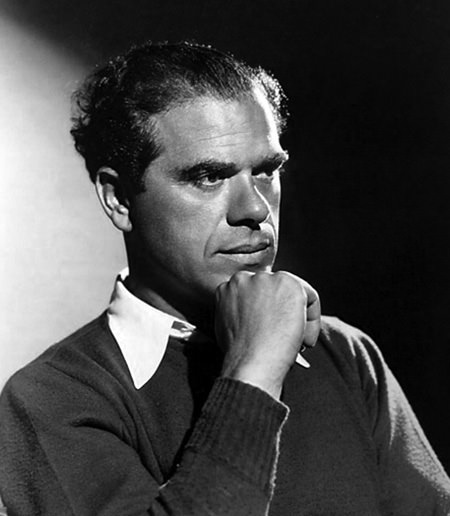
Movie director Frank Capra arrived in America at the age of 5, after traveling with his parents on a difficult sea journey from Italy. Emerging from a life of poverty, Capra became one of the eminent film directors of the 20th century. His movies portray the America of the 1930’s and 1940’s with a stable realism, through which he lovingly embraces his adopted homeland. He is, no doubt, best known for his 1946 classic, It’s A Wonderful Life. But earlier in his career Capra helms a trilogy of films emphasizing “…the infinite goodness of the common citizen.” These are Mr. Deeds Goes To Town (1936) Mr. Smith Goes To Washington (1939) and Meet John Doe (1941)
In a recent revisit of Meet John Doe, I was impressed with its durability. The story concerns a reporter who has just been fired by her newspaper. Following Ann Mitchell’s (Barbara Stanwyck) layoff, she begs the managing editor, Henry Connell (James Gleason) to allow her to stay on, since she’s supporting her mother (Spring Byington) and two sisters (Tina Thayer and Carlotta Jelm.) But her appeal is to no avail. Angry, Mitchell gathers up her belongings and prepares to exit. But then, as a parting shot, she composes a fake letter from one “John Doe.” In the letter, “Doe” alleges to be so downtrodden and distraught by the cruelty of society, he intends to commit suicide by jumping from the roof of City Hall on Christmas Eve.
The newspaper prints the letter and the strategy works. Mitchell is reinstated. But the scheme succeeds a little too well. It causes a sensation. The public relates to “John Doe” and wants to help him. Of course, there’s one problem….”John Doe” does not exist. The Stanwyck character suggests they hire a “fake John Doe” to embody the pathos of the letter. Enter: Gary Cooper…as John Willoughby—an ex-baseball player down on his luck. He seems perfect for the role. But trouble brews when the real man begins living up to the high ideals of the fake man.
I find the film to be enjoyable and quite inspiring, still, after 81 years! It embraces the value of the common individual as it echos themes that resist social polarization. Cooper’s John “Doe” Willoughby, at first rejects the notion of his symbolic mission to “love thy neighbor.” Initially, he is only interested in the material rewards of the ploy. Eventually, though, he evolves into the social champion that Mitchell devised. The reporter also transcends her initial commercial intent. After reviewing the diaries of her late father, she utilizes the discovered principles to create a selfless, compassionate and communal hero. Cooper’s “John Doe” embodies that concept well beyond anyone’s expectation.
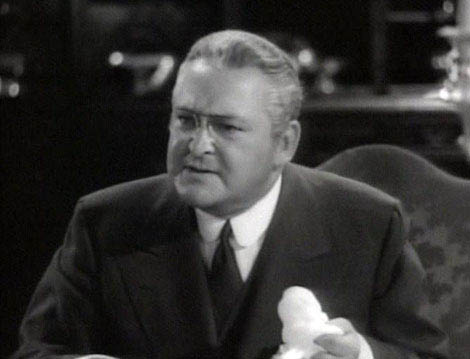
As a result, the movement sweeps the nation, with “Joe Doe” clubs emerging in every state. It becomes a true “grass roots” coalition. Enter: D. B. Norton (Edward Arnold), a publisher and diversified business man…with high political ambitions. He sees the “John Doe” faction as an opportunity for manipulation to his personal aspirations.
This aligns with a common Capra thread suggesting a darkness, lurking in the heart of American culture, promoting the possibility that good people can be negatively exploited.
In the simplest of terms, Meet John Doe is a morality play, plotting good against evil. As an audience we clearly and obviously cheer for the “good.” I have to wonder, though, if it would be all that clear and obvious if the film were to be remade utilizing today’s values.
There is much to regale in “Meet John Doe.” Based on a story by Richard Connell and Robert Presnell, Sr. the screenplay by Robert Riskin is crisp and appealing.

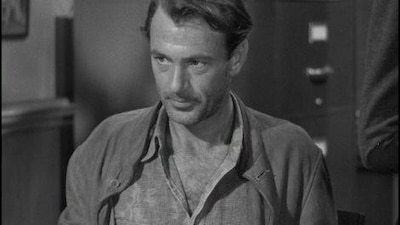
Gary Cooper is truthful and forceful as John “Doe” Willoughby. He has a lot of dynamic things to say in the movie, but he comes across as realistic as a common acquaintance. I’ve seen quite a few of his films and I believe his versatility to be the key to his longevity. Many of his roles are heroic in nature, yet his understated sensitivty always comes through. Soprano fans surely remember Tony often lamenting, “Whatever happened to Gary Cooper?”
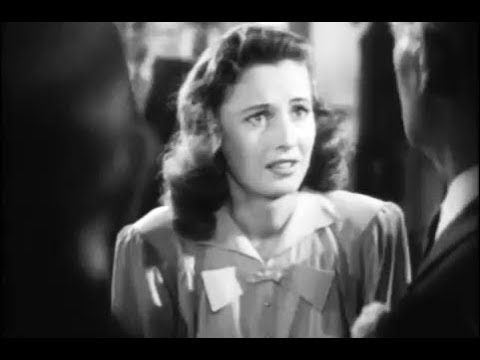
Barbara Stanwyck is probably best known to baby-boomers and beyond as a televison star of The Big Valley and The Thornbirds. However, before that, Stanwyck was a major Hollywood movie star, having made 85 films. In Meet John Doe she displays a driving impact in her focused interpretation of Ann Mitchell. Physically appealing, as always, she conveys a likable presence. Her high energy is a perfect counterpoint to the more laid-back Cooper. The sexy alluring persona she would later display as the femme fatale in Double Indemniy, is nowhere to be found here…another example of her flexibility.
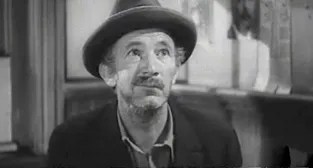
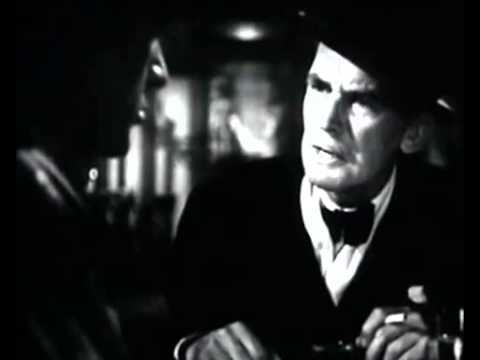
Though both stars are memorable, Meet John Doe also boasts a magnificent supporting cast…each contributing to the exquisite Capra pastiche. They include, but are not limited to: Walter Brennan, as Cooper’s skeptical sidekick, perpetually wary of the “healots”; James Gleason, as the managing editor who delivers the inspiring “lighthouse” scene. In it he warns of those who would jeopardize the American way for their own selfish end and Edward Arnold, as a zealot and would-be puppet master.
But the truest voice is that of director Frank Capra. His early career in silent films and screwball comedy, is clearly at advantage here. The dark shades of this story are lightened significantly by Capra’s comic touches. These go a long way in contributing to the film’s appeal. He is also an expert at pacing the film. It moves along briskly and with positive energy. Historically (1941), America is in an isolationist frame of consciousness. Capra uses the movie as a platform to reaffirm American values. Above all, the work is capable of appealing to everyone. It was a time before the niche separation of cinema into rom-com, sci-fi, comic book, fantasy, etc. The days of such univeral appeal are not likely to return. But, thankfully, we have the works of Stevens, Ford, Hawkes and especially Capra that allow us to return and reflect. If you get the opportunity, take a look at Meet John Doe. You might feel a little better about things…or perhaps not.

 billbenbarker