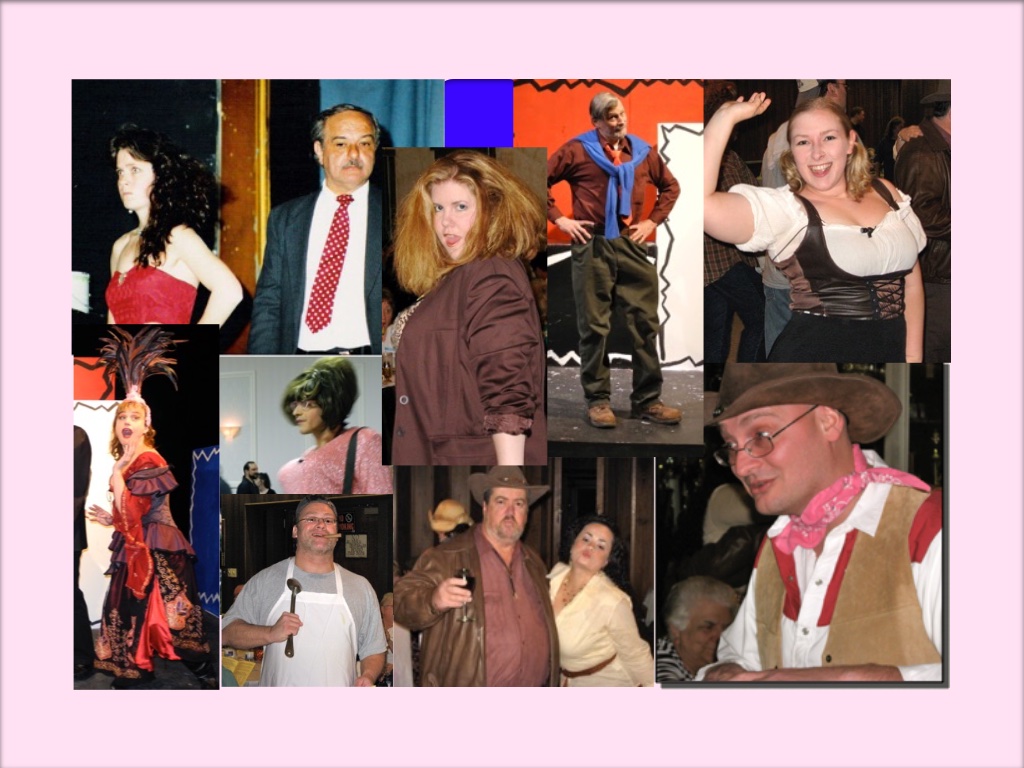
 Folks who know me at all, understand the theatre to be a part of my life. Certainly never as means of sustenance but rather for essential internal gratification…like breathing. I won’t use the term “amateur” as it tends to suggest a negative context. “Ardent” or “Passionate” might better describe the caliber of engagement. It began when I was a teenager in a summer recreation program: You Can’t Take It With You and The Desperate Hours (circa 1965). I found that experience to be not only creatively stimulating, but also a benefit to my social state of being. I didn’t have a lot of confidence as a kid. I wasn’t a particularly good student and I certainly wasn’t an athlete. I was always a bit overweight and never on the popular list. But my parents were greatly encouraging and held a non-negotiable expectation that I would go to college. Thank God! …For left to my own devices I would most surely have passed-up the opportunity. Prior to discovering the theatre, I was a “band” kid. I played the saxophone in concert and marching band. But, alas, although I emerged as a leader in that sub-group…in retrospect, I really wasn’t very good at that either. As I’ve grown older, I’ve concluded that my slower reading rate probably held me back in this endeavor as in most academic skills. My suspicion, after all these years, is that I was probably afflicted with some kind of visual impairment such as dyslexia, but educators didn’t know much about such things in those days. But the theatre, it seemed, didn’t actuate so much on a fluent reading rate. At least, here, I was able to beat the system.
I think what I discovered as I evolved through my early life was the variety and diversity of experiences that were available to participants in the theatre. I was, of course, first drawn to the typical comedies and musicals. Often old-timely Broadway chestnuts, downsized to teenagers with gray-sprayed hair and penciled age lines on their foreheads. What fun! I thoroughly enjoyed these experiences and envisioned myself as a future Stanley Kowalski or Sky Masterson. As a college student, I grew an appreciation for the classics…Molière, Chekov, Shakespeare. I found these works to be wonderful as they provided me with new levels of realization.
In the creation of community theatre, there was a return to those perennial “chestnuts,” along with more contemporary plays and musicals as they became available. These offerings were attractive to participants and audience alike. At the same time, knowledge and experience in the classics enhanced execution.
In fact, it seemed to me that all dramatic genres are clearly structured and dependent upon the same literary conventions…protagonist, antagonist, conflict, theme, setting. ..etc. Over hundreds of years of playmaking…there’s not a lot of new material to be found along any of those lines. What is different is the style and vision of the work.
It’s all wonderful and deeply appreciated by most theatre people.
But….then….someone invented a genre we know today as murder mysteries. My community theatre began producing murder mystery shows on our main stage, primarily in an effort to offer something new for our actors and audience. Later we transitioned to dinner theatre experiences and eventually became dependent on them for essential fundraising opportunities. We found these experiences to be enjoyable as performers.The audiences, as well, seemed to be pleased by the change of pace. Of course, whereas the “chestnuts” were written by the likes of Neil Simon and Moss Hart, the murder mysteries are authored by essentially unknown entities. They also feature broad situations, exaggerated characters and, sometimes, bawdy, adult humor. For these reasons, I believe, some theatre people tend to disparage the work as unworthy of attention. In fact…perhaps regarding it as somehow diminishing to the integrity of the theatre as a whole.
Obviously, I disagree with that notion. I believe the murder mystery characters find their genesis in Commedia dell’arte …. an Italian style of stage comedy that was popular in the 16th through 18th centuries. It featured both scripted material and improvisational elements.
According to Wikipedia:
“The characters of the commedia usually represent fixed social types and stock characters, such as foolish old men, devious servants, or military officers full of false bravado. The characters are exaggerated ‘real characters’. ”
Sound familiar? This format has been passed down through the generations of theatre styles: melodrama, farce, sketch comedy, situation comedy and more. But it finds, I believe, particular familiarity in the land of the dinner theatre murder mystery: stock characters, exaggerated situations, good guys and bad guys…all of it….right out of the Commedia. In addition, I find a particular challenge to actors in these shows. They are required to be true to the author’s scripted intentions but, at the same time, required to significantly contribute to the text via improvisational interactions with other characters, as well as, with the audience.
Clearly, everyone is entitled to his or her opinion, but my sense is that most criticism of this genre comes from artists who are inexperienced in its challenge and execution. Would I prefer to play Willy Loman? Sure…sometimes. But there is significant satisfaction to be gained, I believe, in the explorations of a good old fashion murder mystery.

 billbenbarker